Sunday, 14 March 2010

Silence and veggie food


After Bangkok it was time to head north. After a brief stopover in Sukhothai we reached Chiang Mai, the main town in the north of Thailand. Chiang Mai is famous for its temples, over 300 in a relatively small area and its night market. However, many tourists visit Chiang Mai merely to organise a hill-tribe trek. We had planned to do the trekking in Laos; apparently in Thailand, especially aroung Chiang Mai, the trekking is very explotitative towards the tribes, turning it into a 'human zoo' experience. We decided to opt for something a bit different; a meditation retreat. After having been in Asia for a while, especially after visiting our friend in Penang, we both became interested in finding out more about the Asian 'way of life'. Buddhism is the centre point of the lives of many Asians, especially in Thailand. We were struck by the calmness and peacefulness of the Buddhists we met, and decided we wanted to know a little more.

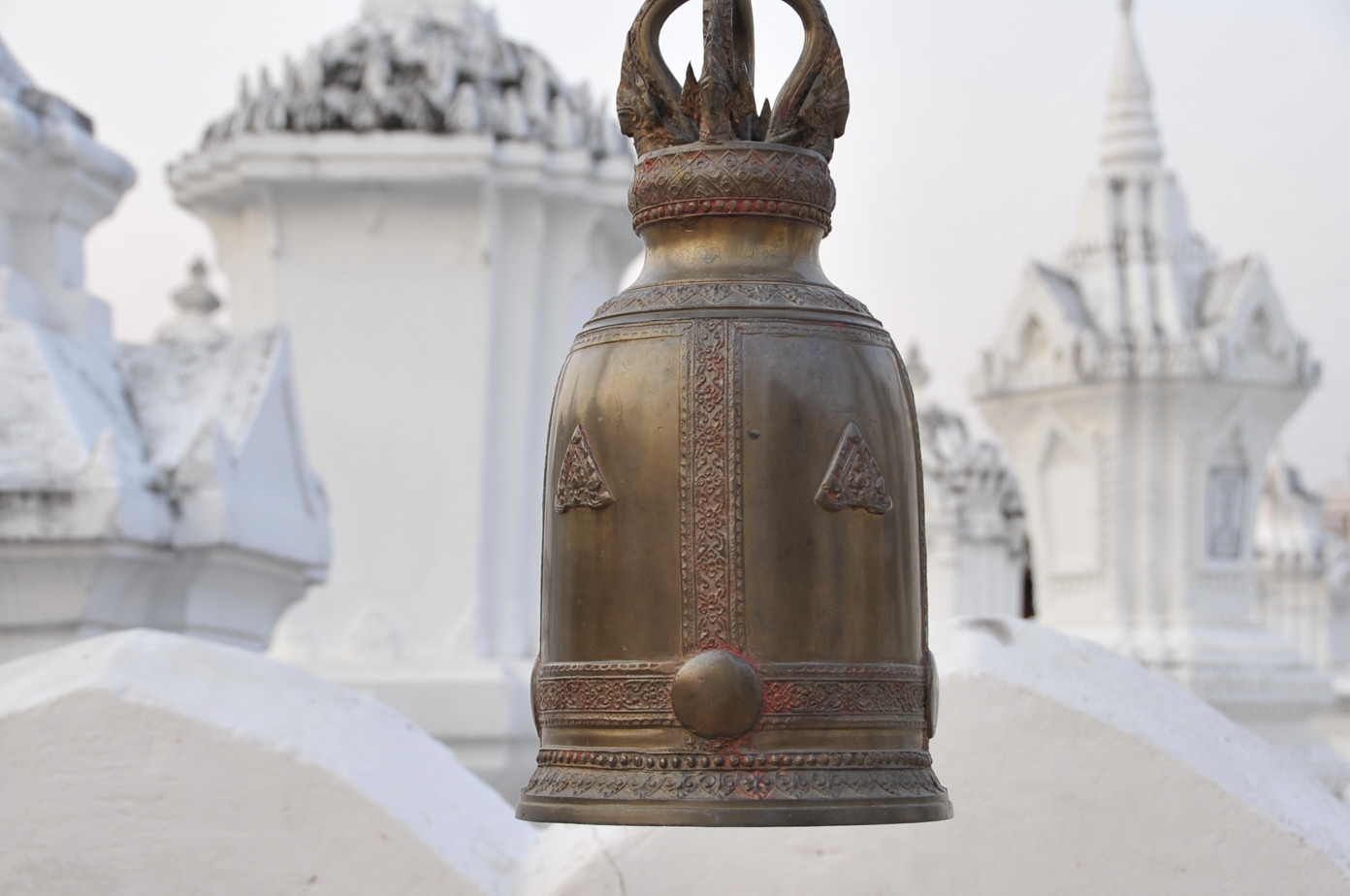


And so we found ourselves, with 15 others, all dressed in white in the courtyard of Wat Suan Dok in Chiang Mai, waiting for our transportation to the retreat, for two days of meditation, vegetarian food and silence. Now, the silence bit worried me. The retreat was let by two monks in their twenties. I was amazed straight away by their peacefulness and wisdom, despite their young age. They gave us a talk on the fundaments of Buddhism, followed by examples of sitting, walking and lying meditation. They portrayed Buddhism as a way of life, rather than a religion. Buddha is a man, a master, not a god; his followers aim to follow his teachings, not to seek eternal salvation. Meditation was defined as 'food for the soul', the chance for one to empty one's mind for a while and let it sit still. I thought meditation meant letting one's mind run free; in fact it is exactly the opposite. During Samatha, or concentration meditation, the mind is supposed to focus on one thing, such as breathing, pacing, the movement of the abdomen or meditation beads. Whilst during Vipassana, insight meditation, the mind is focused on itself.


What impressed me was how they portrayed Buddhist way of life a diametrally opposite from Western. Western way of life emphasises the value of multitasking, efficiency and the self. On the contary, Buddhist life cherishes the value of doing one thing at the time, and looking out for others. I disagree with the popular belief that the West is wealth-oriented; I'd say efficiency is a better word. Working in London, everybody wanted everything done 'quick and well'. It reminded me of my grandmother's favourite phrases: "presto e bene sta male insieme" (quick and well don't go together). This is the message I got from the retreat; efficiency is not paramount when it comes to wellbeing and happiness, mindfulness is. By 'mindfulness' the monks meant doing one things at the time and dedicating your mind entirely to the task. The result is a slower, less efficient life from a Westerner's eyes; but surely a life less prone to stress, anger and frustrations.


I have refused the craving for things a long time ago. I have no car, no fancy phone or TV, I don't like luxury or what is not necessary. Some may argue travelling is my luxury; I want to travel because I want to know more about life, about different cultures and traditions. The meditation retreat really hit the spot; I found out an alternative to Western mainstream thought, a philosophy that I wish to pursue in the future. The time spent in the retreat was time with myself, trying to train my mind to be still and practicing mindfulness. The silence helped; although I must admit I was glad to be talking at the end of it. It showed me how much we rely on spoken word for everyday interaction; how being 'social animals' emphasises the hectic interactions of everyday life. Mindfulness comes as an effort, something that goes against my instincts. In those rare moments my ming gained stillness I felt peace, but the moment was fleeting and soon my mind started jumping again. Practice would surely help; but even just participating to the retreat helped me to look at the world with different eyes, knowing that when I'll be back in Europe I'll be able to look back to this experience, feel happiness and peace.


Chicken sticks and cockfights


I really looked forward to Bangkok. The welcome we got, however, was not one of the best. After 12 hours on a night bus which arrived at 5 in the morning, we had our first encounter with the 'tuk-tuk mafia'; the driver refused to take us to our guesthouse. After two attempts and 250 baht poorer we eventually got there. We found out by the owner that tuk-tuk drivers refuse to take tourists to the guesthouse we chose because they do not get commission. Perhaps I should explain this point. In many countries, getting off a bus or a train tourists are met by an army of touts. In many cases these are merely guesthouse owners plying their trade, enticing prospective punters to their place. In Thailand this is carried out by tuk-tuk drivers, which in turn get a commission from the guesthouse's owner; the commission is then built into the nightly rate which is paid by the tourist. PLEASE PLEASE do not follow touts for accommodation in Thailand. The best guesthouses usually don't pay commission anyway; don't believe touts if they tell you the place you want to go to is closed, full, burnt down or whatever. This mafia only puts genuine owners of great guesthouses out of business. Do not support it.


Riverview Guesthouse in Bangkok was fantastic. It is situated in the heart of Chinatown, with a view on the Chao Phraya river. I loved Bangkok, because it was the first Asian capital I visited with a genuine traditional core. Being close to the river we travelled by riverboat around the city. We were able to appreciate how the Chao Phraya was, and still is, the spine of the city. The river was not reduced to a pretty background for fancy restaurants and expensive dinner cruises as it is in most European cities. We could see barges, ferries, long tail boats and river taxis crisscrossing the river all day long. The river was alive, not a memory of the past. And Chinatown was great. Not a Chinatown with the token red lanterns and crispy ducks, this was the real deal. Rickety teak houses overlooking the river, doorways open to show a glimpse of a red altar inside, shops that sell anything you can possibly imagine and many things you cannot. When we visited Khao San Road, the backpacker's ghetto, we were so happy we stayed in Chinatown.


I mentioned briefly a dark side of the Land of Smiles. I certainly did not expect to find it at the Chatuchak weekend market. This market is perhaps the largest I have ever been to. It can be described as a cross between Spitafields, a Moroccan souk and a livestock market. Spitafields for the number of up and coming designers in addition to those who sell the standard tourist-to-Thailand clothes (fishermen's pants, Singha singlets and the like). A souk for the bustling atmosphere, the narrow alleyway and the impossibility of finding one's way. And livestock. That's self explanatory. The market doubles as a pet market. There weren't only goldfish and cute puppies such as Sao Paulo's Embu market. We saw squirrels tied to a red ribbon, apparently the latest craze for Bangkok's teens. But we also saw sugar gliders, a monkey, a metre-long iguana in a tiny cage, endangered tortoises, plus a small hawk and owls for sale. Our attempts to take pictures were met with hostility; the stallholders were well aware they were trading illegal pets. We stumbled upon a cockfight; the punters were welcoming this time but the spectacle was rather macabre. The two cocks were released by their owners into a makeshift ring, where they were suddendly enveloped around one another, pecking at chests, throats and heads. It appeared like an animal version of muay thai; the cocks circled for a while and then it was just full-on contact. They didn't fight till death, although by the end the loser was pretty beaten up. It was interesting to see how quickly a luscious and pampered bird turned into a scabby, featherless and bloody defeated cock. We did not know Thais, especially in small Northern towns, are crazy for cockfighting. Travelling north over the next few weeks we could see several cocks being raised for the purpose of fighting; it was easy to tell them apart from the ordinary 'breeding' cocks; first of all for their beautiful plumage, and secondly because they are raised in isolation under wicker bells.


Bangkok is a great city. There are several amzing sights, a buzzing atmosphere and the food is great. We ate only street food in Bangkok; the choice is tantalizing and ranging from every corner of the kingdom. From Chinese style rice and chicken, to fish-ball noodle soups, Pad Thai and fiery papaya salad, nothing disappointed us. And the most expensive dish was probably 30 baht. Nick found chicken sticks, his new love; small chicken kebabs battered and fried, 10 baht each. I felt street food encompasses the soul of the city of Bangkok or Krung Thep (city of the angels, the local name); the political and cultural centre of Thailand, a place on the move.

Mango shake and banana pancake, plus a burger


Once again, I have not been faithful to my word. The time of idleness in Australia did come to an end, with my relief. We took the road again, after a two-weeks roadtrip around the South of Australia we reached Asia, where we have been for nearly two months. And in all this time, not a single blogpost. Not one. I guess apologies would be necessary, to start with; plus a further promise of not letting my readership down once more. Readership! Do I have one? Apparently so. If you are reading this blog, please comment. Write whatever you like, be it good or bad. Well, what can I say? I will write, but not in retrospection; I will write about what I am doing, and every now and then post something about a past experience. I guess it could be an interesting read, playing hopscotch through the continents, from Asia to South America and back to the old Oz. I will start where I'm now: Thailand.


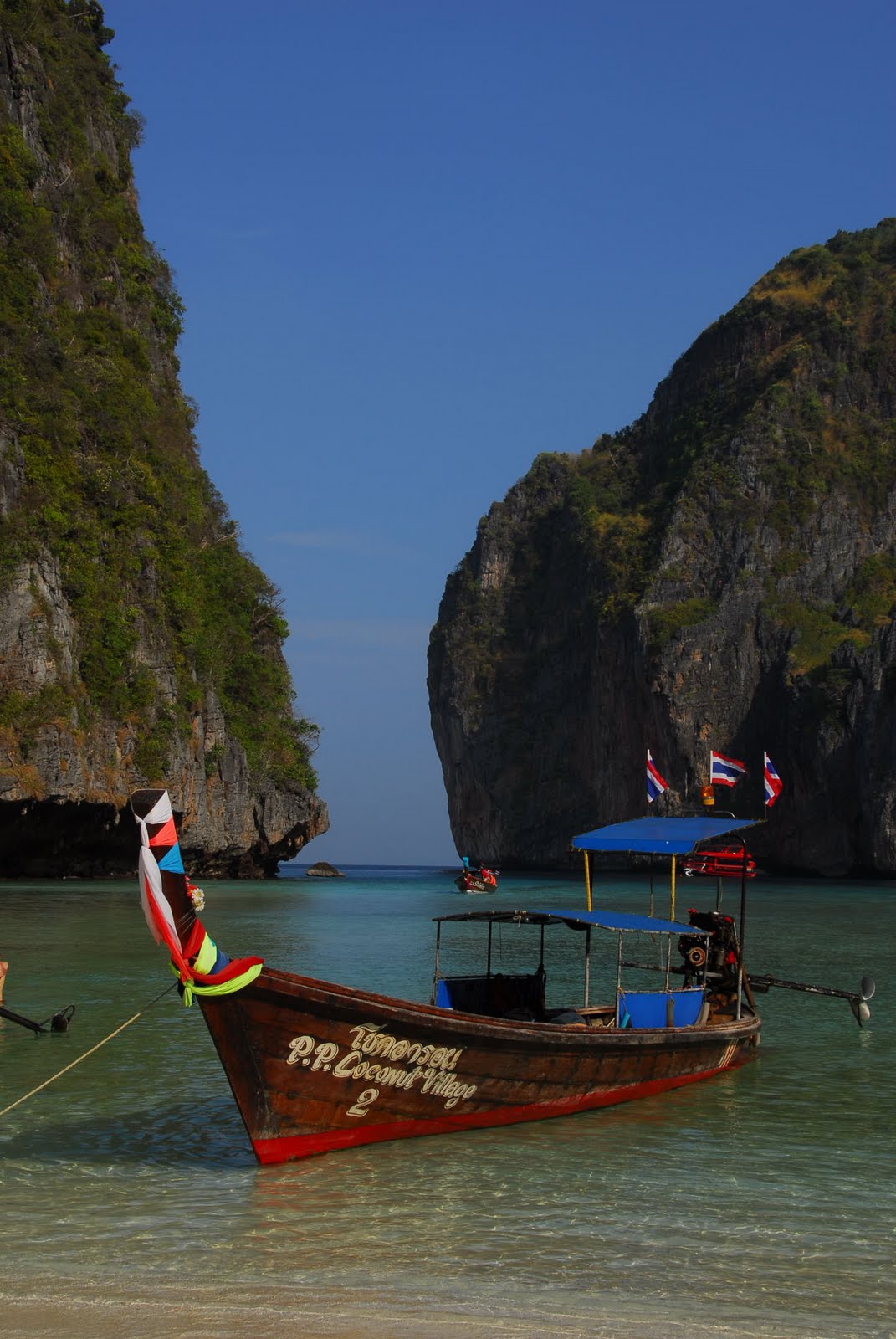
What does the word Thailand bring to mind? Lonely Planet reckons beaches, Buddhist monks, Hill Tribes and the hubbub of Bangkok. Personally, I believe beaches is all what many visitors to Thailand want. Not being a beach bum, I was tempted to skip the beach thing altogether. However, coming from Penang in Malaysia meant that a stop in the south of Thailand would have been a welcome break from a otherwise 36+ hours bus journey. We chose Koh Phi Phi, for its natural beauty and the fact that we received several suggestions to visit the island. We didn't want somewhere overrun with tourists, neither somewhere utterly remote. Koh Phi Phi seemed like a good choice. We picked the little-known (even to the locals!) Ao Toh Ko, a beach on the eastern side of the island, with cheapish bungalows, a laidback atmosphere and great snorkelling.


The resort itself was nice enough; still cheap by Western standards but extremely pricey by Thai standards. We were later to discover that the prices of the South are more or less triple of the ones in the North, with Bangkok somewhere in the middle. In Koh Phi Phi, we stayed in a 500 baht bungalow (about £10) which was really basic and next to the generator which ran all night. In Pai, Northern Thailand, we stayed in a bungalow which for the same price offers wifi, excellent furniture and facilities, private bathroom plus a deck from which it's possible to fish in a lake.

I personally wasn't impressed with Koh Phi Phi. The place was picturesque, with limestone cliffs, clear water and a beautiful reef for snorkelling. As a matter of fact, Toh Ko Beach Resort was a great place to stay. What I didn't like was how the island was geared towards tourism. In Ton Sai, the main village on the island, everything is built for tourists. Everything. Perhaps even more than the Gold Coast in Queensland. The main demographic that was seemingly targeted was what I call the 'mango shake and banana pancake' brigade. A variation on the shopping list travellers I mentioned in South America, this brigade is composed by those who visit Thailand but do not go beyond the islands, the parties and the mayhem. Those who travel on a budget but refuse to try local street food, except for the comforting but exotic-sounding specialties which give the brigade its name. People who do not seek a cultural experience in Thailand, but are interested in buckets of booze, nightclubs with cheesy western music and ping-pong shows. And after that they've 'done' Thailand, perhaps even Asia. Needless to say, three days and we were off.


I feel like I am not giving enough credit to Toh Ko Beach Resort, though. The place was really lovely, relaxing and friendly. Some lingered for weeks, I guess I would've too if I liked the beach life. Just steer clear of Ton Sai. Three days was enough for me, time to go to Bangkok. However, there is always the unexpected. After a suggestion by Ryan, the Canadian expat living on Toh Ko, we decided to stop in Krabi to go to see a Muay Thai fight night. The stadium is on Ao Nang, a horrid beach with an atmosphere possibly cheesier and more western-oriented than Ton Sai. I must admit, we stayed at an Irish pub and had a burger for lunch, partly because it looked good and because I fancied one. See, I am not always so high and mighty. The Muay Thai night was a real eye-opener. Firstly, I was able to appreciate for the first time the importance of the King for Thai people. Before the first fight the anthem was played with a projection of an image of the King on a screen. Everybody, even the naughtiest teenagers, stood up in perfect silence. Then the fights started. It was completely different from conventional boxing; at times it resembled a dance, at other time utter frenzied madness. A fighter was carried off with a broken leg. There seemed to be no rules; anybody can hit wherever and however they like. It was graphic but captivating, and a great photo opportunity for Nick. The first example of 'brutal Thailand', a darker face of the Land of Smiles, that we were to discover further in Bangkok.

Sunday, 27 December 2009

Roast pork rolls


At a first glance, Lima is not nice at all. Especially driving in; had we flown in, perhaps I'd have had a different opinion. It's one of those sprawling metropolises with no beginning and no end, dusty and polluted. We went through several slums on the way in, in two occasions people tried to assault our big yellow truck. To be honest, I didn't know what to feel in those moments. Should poverty be an excuse for crime? Would my D200 be put to a better use had the attempted theft in Quito succeeded? Personally, I disagree. But at the same time, a big yellow truck full of gringos may indeed feel like a golden goose for those Limenos living in the slums.


We arrived in Lima to find ourselves in the middle of a religious festival. During the first weekend of October, Lima hosts the celebrations for the Senor de los Milagros (Lord of the Miracles), Lima's saint patron. Celebrations continue throughout October. Because of the purple robes and decorations adorning the city for this celebration, October is known as the mes morado (purple month). Our hotel was right on one of the streets the procession went through. Groups of men were carrying the heavy statue and other images of the Lord of the Miracles, whilst women chanted and waved frankincense. People threw rose petals as the sacred image passed under the balconies and windows of houses. The whole experience felt sacred and uplifting. It reminded me of my childhood, of the day of the saint patron in Arenzano, where I used to spend the summer with my family. That day, July 28th, was the highlight of my summer for years. I was allowed to eat plenty of sweets, and go to see the procession in the evening. I always marvelled at those men carrying the heavy crucifixes and images of saints. But the best were the fireworks at midnight. Looking at those magic patterns and flames in the sky I remember thinking I wanted to see the world.


After two days sightseeing in Lima, I changed my mind about the place. The city retained a certain aura of fascination, a faded elegance typical of those places whose moment of grandeur is well and truly gone. It reminded me of Casablanca. It was interesting to be there in the month of October, to witness a display of devotion that is becoming harder to find in our old Europe. In a courtyard near St Francis of Assisi's church there was a small food market, selling local food specialties. Alongside several types of sweets we were able to sample some roast pork rolls, on sale for 1 sol each (30 US dollar cent). Needless to say, we had 3 each. The pork was wonderfully moist, served with chilli and onions like ceviche. Peruvian food was wonderful, thus far. Wonder what the rest of Peru was going to offer.


The first Inca Kola and Ceviche Peruano

After visiting the beautiful colonial city of Cuenca we headed towards the Ecuador-Peru border. We planned to spend a few days relaxing on the beach whilst making our way down to Lima where we were going to pick up some new overlanders. All was going well, the group was getting along amazingly. As a former psychology student I found interesting the fact that a newly-formed group could form a group identity in such a short time. I guess it's a matter of circumstances as well as the fact that we were all there for a common purpose. Personally I felt really pleased with the overlanding experience; a good surprise, considering that i expected to hate it, and I thought I would have considered the truck as a mean to get fro A to B rather than a 'common space' for the group, the place where we got together and got to know each other.

Peru looked completely different from Ecuador since the beginning. Gone were the verdant mountains and valleys, Peru was barren and dusty. The north of the country was incredibly dreary, a flat expanse of sandy desert and rocky terrain. Gone were the 'ooh' and 'aah' of amazement around every bend whilst driving. And how about Peruvians? After spending a month in Ecuador we kept hearing bad things about Peruvians, that they were dodgy thieves and so on. Indeed in Quito we were mugged by two Peruvians. Why this animosity? I guess partly it's due to the Peruvian-Ecuadorian war in the 1940s, or maybe it's just heritage of the continuous bickering that happens between two neighbouring countries, such as France and England? I wouldn't know to be honest.

In my opinion, I felt welcome both in Peru and Ecuador. Although, I have to say, not as welcome as in Brazil or Argentina. In the South American west I felt like a 'gringa', a foreigner. Not that I expected to be treated like a local, but at times I felt locals considered tourists merely as a source of income, rather than genuinely wanting to make them feel welcome. However, this was only my experience in a handful of occasions, by no means do I wish to generalise this statement to the whole of these two countries. If I was to find differences between Peru and Ecuador, I'd probably say Ecuadorians are far more Americanised. It may be due to the fact that Ecuador uses the US dollar as a local currency, ot to the fact that many Ecuadorians I spoke to spent some of their formative years in the States. The fact is, most Ecuadorians I met saw the USA as the model to follow. Conversely, Peruvians seemed more disillusioned about politics, thinking all politicians are corrupt anyway. Maybe the Fujimori decade is the reason for that? Once again, I can't tell.

On a different note, the time spent on the beach in the north of Peru was really enjoyable. We camped on the beach in the tiny village of Punta Sal, near Mancora. There's something special about sleeping on the beach, under the stars, and waking up every morning to jump in the sea. I was finally able to try the original ceviche, not the Ecuadorian rip-off (according to Peruvians, I still thought it was nice). I have to say, the Peruvian version is far superior. You get a plateful of fish, not a bowl of soup. The fish is marinated in lime juice and served ultra-fresh topped with chillies and onions, with an accompaniment of sweet potatoes annd corn. A dish that I will try to introduce to introduce my family to. Will it work in the north of Italy ass well as it did in the north of Peru?

At the border city of Tumbes I had my first encounter with the drink that was going to be defining my time in Peru. Inca Kola is a bright yellow soft drink, incredibly sweet and full of caffeine. I don't know how to describe the taste; some say it's like bubblegum, others compare it to creaming soda. For me it's just Inca Kola, a godsend for hangovers, heat and altitude. I bough my first one right on the border, with my last dollar coins. And my last one? Bought on the Peru-Bolivia border, I carried it through Bolivia, Argentina, Chile and New Zealand, and I drank it on Christmas Day. It didn't feel right though. we weren't in Peru.

Tuesday, 22 December 2009

Homemade Falafels


Our second-last stop in Ecuador was Banos, a small town nested in a verdant valley surrounded by active volcanoes. Banos is popular with backpackers and globetrotters as Ecuador's adventure-sport capital. Not being keen on adventure sports, I was looking forward to it as a time for relaxing and hiking in the beautiful surroundings. We stayed in a campsite called Pequeno Paraiso just outside Banos, run by two expatriates and offering treats such as cookies, chocolate cake and homemade ice-cream alongside the usual booze selection.


By then we got to know quite a bit more about our travelling companions. Everybody was travelling for different reasons, but the underlying motive was a genuine love for our planet, a willingness to explore and discover. Camping allowed us to get together even more, as we were expected to cook in groups and clean after our dinner. We had some wonderful meals: home made pizza, curries, Mexican burritos and a legendary seafood barbecue amongst others. We also had an outstanding guide, Rachel. Before joining the trip I was concerned of finding myself in a group with a young, patronising guide who knew little Spanish and little about the place; this is what happened to Nick during his previous overlanding experience. Rachel was fantastic, really knowledgeable and friendly, never patronising. Little did I know then that we were going to become good friends.


In Banos amyriad of activities were on offer; from horse riding to bridge swinging, canyoning and whitewater rafting. Some of our group opted to try canyoning, essentially an activity whose main task is to descend a river, jumping off waterfalls, abseiling and floating. The $ 45 price tag and the fact that the weather was cold and miserable were enough to dissuade me. So we headed off for a spot of hiking. First we visited the Pailon del Diablo waterfall, which was impressing but dwarfed by my memory of Iguazu. I liked the fact that a small path allowed the visitor to scramble up the rocks to a platform which was at the top of the fall. Afterwards, Nick and I plus another guy named Terry decided to go for a hike in the afternoon.


Our driver Brendan had suggested us an intersting walk. It involved crossing the valley by cable car to the other side, walking to the following cable car and coming back. Around 3pm we took the first cable car. The view was thrilling yet terrifying; the cable car was powered by a truck engine, with gears and all. As it took off it sped up to breakneck spped, then ground to a halt about 5 inches from the rock face in front. The three of us took the first path we saw; a trail called Sendero de los Contrabanderos (Smugglers' Path). The trail snaked up the mountain side, allowing views which got more spectacular with every switchback. We passed men and women on donkeys carrying bails of hay. The trail went up, and up. At one point we estimated we had gone up in the vicinity of 1000 m from our departure. The trail was still going up, and we could see no cable cars going to the other side. It was getting close to 5, and we had a problem.


The problem lies in the fact that Ecuador lies on the Equator, hence its name. As such, the sun rises at 6 am and sets at 6pm all year long. Another characteristic of being in the vicinity of the Equator is that twilight is extremely short; less than half an hour after sunset and it's pitch black. Nothing like the late June twilight in London which lasts for hours, followed by a brief night only to turn into dawn again. That left us with about one hour and a half to find the cable car and cross, or face a night on the trail, as we had no lights and the vertical drop on our side was something we didn't wish to experience. There was no one to ask and we found ourselves in the walker conundrum: keep going or go back? As most reckless walkers do, we kept going.


Eventually we got to a small farmhouse perched on top of a pass and inhabited by local Quichua indios. Their knowledge of Spanish was limited, mine of Quechua was non existent. I asked for directions to the cable car and the wife offered to show us the way, or so i thought. We set off trying to keep up with her, she was almost skipping and running down the mountain. She was small and nimble, and her walk reminded us of a goat; hence we nicknamed her the 'goat spirit'. By then I was terrified. It was getting darker every minute and there was still no cable car in sight. Plus we had failed in our task to keep up with the goat spirit, although she probably had no intention of showing us the cable car but was just going off for her own business. As our paths crossed again about 10 minutes later and we saw her clutching a bucket of water, I realised the previous statement was probably right.


Shortly after 6 o'clock we saw a tiny line down across the valley in the distance. Thinking it was the cable car, we scrambled down the mountain to reach that beacon of hope before total darkness enveloped us. And we were right! We had to interrupt the operator from his dinner to drive us across, but we were safe. We walked another few kilometres to the campsite, savouring the delicious dinner of homemade falafels that awaited us and laughing about the day's adventures. It's amazing how something scary can become a beautiful memory once it's solved. And the falafels were delicious indeed.

Baked tilapia in banana leaves


As the middle of September came we got ready to start the second part of our South American adventure: overlanding from Quito to Santiago. Not many people knew; I was rather ashamed of ruining my image of fearless traveller by signing up to a semi-organized trip. We decided to go overlanding because Nick did it in the past and loved it. I was not keen on overlanding originally; I expected to find myself in a truck full of 18 to 21-year-olds, interested only in getting drunk and 'ticking boxes'. Those people I call 'shopping list travellers', who quickly move from country to country to see the main sights and boast to their friends back home 'I did 56 countries'; as travelling in this way was some sort of life-enriching experience. Whatever. I approached the meeting room of a dingy Quito hotel still clutching my laundry and feeling rather concerned. Would I enjoy two months between Ecuador and Chile if my travel companions were not of my liking?


I felt relieved as soon as I saw the crowd. First of all, the mean age of the group was higher than I expected. Also, talking to some during the rest of the evening I discovered that they weere more similar to me than I thought they would be. So, why people go overlanding? Overlanding is a way of travelling that ranges somewhere between independent and organised trip. The fees paid cover accommodation and transport, plus some meals and activities. Accommodation is usually camping or basic hotels, transport is on a purpose-built truck. In my opinion, people choose overlanding for two main reasons; ease of transportation and desire to meet new people. The appeal lies in the fact that overlanders are usually young, between 20 and 40 years of age; many are singles. Overlanding allows freedom, far from the constrictons of an all-inclusive trip. So far so good, I thought, after meeting the 16 people I was going to live with for the next 2 months.


After two days visiting the Otavalo market and Papallacta hot springs, we headed back into the Amazon. As we got to the lodge, us and another couple who visited the Amazon previously were really disappointed. There was no need to spend hours on a canoe or the back of a truck, the lodge was only one hour plus a short trip downriver from the nearest town. The forest was what disappointed us the most. There was no thich blanket of vegetation such as the one we found in Shiripuno, no feeling to be nested in the heart of nature. It felt more like a house in the country. I felt the place was chosen to allow overlanders to tick 'Amazon' off their list.


My first opinion wasn't entirely right. Yes, the lodge was only 1 hour from Tena. Yes, it was secondary rather than primary rainforest, suggesting that a certain degree of deforestation had taken place. Yes, the owner Tom said tht we were unlikely to see any wildlife. However, the place was beautiful. The lodge and cabins were entirely built in wood, unlike Shiripuno where cabins were open on the sides. The whole lodge was solar-powered, and was promoting a programme of environmental awareness with the local communities. The first target was educating indigenous communities to stop dynamite-fishing. The owner, Tom, was a middle-aged American who fell in love with Ecuador and decided to call this place home. He was extremely concerned with the environment, having built three dams to restore endangered river wildlife such as piranha and turtles. And Mona, Tom's pet Wooli monkey, was our mascot throughout our stay.


Tom was a really interesting character. I always appreciate the company of people who decide to change at some point in their lives. Might be moving somewhere exotic, travelling or changing careers, I like people who are not afraid. Unfortunately, many friends of mine are stuck in a suburban pay-the-mortgage lifestyle. Many want to travel but think it's too late for them, with the car and the house and the kids and the bills. Why not, I say. Why limiting your possibilities to the first job you get, or the first place you move to. Why thinking that once you start life down a certain path, you can't change it. I travel because I don't know where I want to leave or what I want to do. I write to give a voice to my thoughts. I may be wrong, but now I'm happy.


Days were spent lazying on the lodge, playing cards, tubing down the river and visiting the forest. Although we didn't see much in terms of wildlife, it was a good time to relax and bond with the newly-formed group. Mona kept frolicking around us, teasing the boys to play with her and refusing to play with the girls. The food was out of this world, perhaps the best during our stay in South America. What will remain in my heart was a fantastic baked tilapia in banana leaves, with banana flower and rice. It was delicious. Two days into our overland trip, I had already dropped the prejudices I had about overlanding, and I was sure I was going to have a great time.